


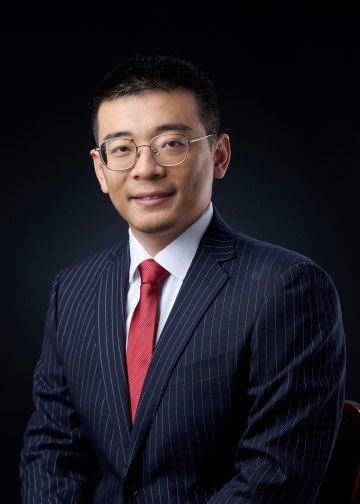
胡皓
副研究员,硕士生导师
一、 自我介绍
我的研究兴趣主要集中在卫星遥感和卫星资料同化的关键理论和技术问题上,目前专注于国产数值预报模式中卫星微波仪器的资料同化技术研究。自2018年以来,我已发表各类学术论文10余篇,曾担任《Nature Communication》、《IEEE TGRS》等SCI期刊的审稿人。
目前,我主持国家重点研发计划青年科学家项目1项,国家自然科学基金面上项目和青年项目各1项,同时作为子课题负责人参与国家重点研发计划项目1项,并作为课题负责人参与湖南省自然科学基金重点项目1项。2022年,我荣幸入选中国气象局“青年英才计划”。
我目前参加了多个国际工作组,包括国际空间科学研究所(ISSI)积雪/海冰发射和后向散射建模工作组、国际气象卫星研讨会(ITSC)数值预报工作组、辐射传输工作组,并定期与国内外专家学者开展线上线下技术交流。
二、你能得到什么
三、你需要具备哪些能力
以上语言文字能力包括中文和英文。
工作经历
|
2021.09 至今 |
中国气象局地球系统数值预报中心 卫星资料同化室 |
|
2019.07 - 2021.09 |
中国气象科学研究院 灾害天气国家重点实验室 |
教育经历
|
2017.11 – 2018.11 |
美国马里兰大学,访问学者 研究方向:卫星遥感和卫星资料同化 |
|
2015.09 - 2019.06 |
中国气象科学研究院,理学博士 专业:气象学 |
|
2012.09 - 2015.06 |
中国气象科学研究院,理学硕士 专业:气象学 |
|
2008.09 - 2012.06 |
中国海洋大学海洋环境学院,理学学士 专业:大气科学 |
主要期刊论文
1. Dong, C. J., H. Hu*, and
F. Z. Weng, 2024: Optimal assimilation of microwave upper-level sounding data
in CMAGFS. Adv. Atmos. Sci., 41(10), 2043−2060,
https://doi.org/10.1007/s00376-024-3323-7.
2. Y. Han, H. Hu, Y. Shi
and J. Yang, Identification and Correction of Radio Frequency Interference of
Fengyun-3 Microwave Radiation Imager Using a Machine-Learning Method, in IEEE
Transactions on Geoscience and Remote Sensing, vol. 61, pp. 1-13, 2023, Art no.
5301213, doi: 10.1109/TGRS.2023.3268678.
3. J. Xu, Z. Ma, H. Hu* and
F. Weng, A Cloud-Dependent 1DVAR Precipitation Retrieval Algorithm for
FengYun-3D Microwave Soundings: A Case Study in Tropical Cyclone Mekkhala, in
IEEE Geoscience and Remote Sensing Letters, vol. 20, pp. 1-5, 2023, Art no.
1000605, doi: 10.1109/LGRS.2023.3243934.
4. Hu H., F. Weng, 2022: Influences of 1DVAR Background Covariances and
Observation Operators on Retrieving Tropical Cyclone Thermal Structures. Remote
Sensing. 14(5):1078. https://doi.org/10.3390/rs14051078
5. Kan, W., Hu, H.*, Weng,
F. 2022: An All-Sky Scattering Index Derived from Microwave Sounding Data at
Dual Oxygen Absorption Bands. Remote Sens. 14, 5332.
https://doi.org/10.3390/rs14215332
6. Hu, H., and Y. Han, 2021:
Comparing the Thermal Structures of Tropical Cyclones Derived from Suomi NPP
ATMS and FY-3D Microwave Sounders [J]. IEEE Transactions on Geoscience and
Remote Sensing, 59(10), 8073-8083, doi: 10.1109/TGRS.2020.3034262.
7. Hu, H., F. Weng, Y. Han, and Y. Duan,
2019: Remote Sensing of Tropical Cyclone Thermal Structure from Satellite
Microwave Sounding Instruments: Impacts of Background Profiles on Retrievals [J].
Journal of Meteorological Research, 33, 89-103, doi: 10.1007/s13351-019-8094-1.
8. Hu, H., Y. Duan, Y. Wang, and X. Zhang, 2017: Diurnal Cycle of Rainfall
Associated with Landfalling Tropical Cyclones in China from Rain Gauge
Observations [J]. J. Appl. Meteor. Climatol., 56: 2595–2605.
9. Zhang, Y., Hu, H., Weng,
F. 2021. The Potential of Satellite Sounding Observations for Deriving
Atmospheric Wind in All-Weather Conditions [J]. Remote Sensing. 13(15): 2947. https://doi.org/10.3390/rs13152947
10. Li, S., Hu, H., Fang, C.,
Wang, S., Xun, S., He, B., Wu, W., Huo, Y. 2022: Hyperspectral Infrared
Atmospheric Sounder (HIRAS) Atmospheric Sounding System. Remote Sens. 14, 3882.
https://doi.org/10.3390/rs14163882
11. Han, Y., J. Yang, H. Hu,
P. Dong, 2020: Retrieval of Oceanic Total Precipitable Water Vapor and Cloud
Liquid Water from Fengyun-3D Microwave Sounding Instruments. Journal of
Meteorological Research [J]. doi: 10.1007/s13351-021-0084-4.
12. Feng, J., Duan, Y., Wan, Q., Hu,
H., & Pu, Z. 2020: Improved Prediction of Landfalling Tropical Cyclone
in China Based on Assimilation of Radar Radial Winds with New Super-Observation
Processing, Weather and Forecasting, 35(6), 2523-2539.
13. Kan, W., Dong, P., Weng, F., Hu,
H., Dong, C. Impact of Fengyun-3E Microwave Temperature and Humidity
Sounder Data on CMA Global Medium Range Weather Forecasts. Remote Sens. 2022,
14, 5014. https://doi.org/10.3390/rs14195014
14. Wei, N., X. Zhang, L. Chan, and H. Hu, 2018: Comparison of the
effect of easterly and westerly vertical wind shear on tropical cyclone
intensity change over the western North Pacific [J]. Environmental Research
Letters, 13(3): 034020.
15. Zhang, X., Y. Duan, Y. Wang, N.
Wei, and H. Hu, 2017: A
high-resolution simulation of Supertyphoon Rammasun (2014)—Part I: Model
verification and surface energetics analysis [J]. Advances in Atmospheric
Sciences, 34: 757-770.
16. Deng, L., Feng, J., Zhao, Y.,
Bao, X., Huang, W., Hu, H., & Duan, Y. 2022: The remote effect of
binary Typhoon Infa and Cempaka on the “21.7” heavy rainfall in Henan Province,
China. Journal of Geophysical Research: Atmospheres, 127, e2021JD036260.
https://doi.org/10.1029/2021JD036260
主要会议论文
1. Hu H., Weng F. Typhoon's Thermal and Hydrometeor Profiles Derived from Fengyun-3D Microwave Instruments. The Tenth Asia-Oceania Meteorological Satellite Users’ Conference (Oral Presentation). December 2-7, 2019, Melbourne, Australia.
2. Hu H., Weng F., Huo Y., Han Y. FY-3D 1DVAR sounding system with scene-dependent error covariances and its applications for typhoon monitoring. The First Fengyun Satellite User Forum (Oral Presentation). November 15-17, 2019, Haikou, Hainan.
3. Hu, H. and Weng, F., 2020. Estimation of Location and Intensity of Tropical Cyclones Based on Microwave Sounding Instruments (Oral Presentation). IEEE International Geoscience and Remote Sensing Symposium 2020, 5442-5445, doi: 10.1109/IGARSS39084.2020.9323785.
4. Hu, H.; Weng F.; Yang J.; Han Y.; Shi Y., 2021. GSDART: A Global Scene-Dependent Atmospheric Retrieval Testbed for Passive Microwave Sounding Instruments (Oral Presentation). International TOVS Study Conferences XXIII.
5. Weng F., H. Hu, Assessments of FY-3D MWTS on-orbit Performance Using Suomi NPP ATMS Data (Oral Presentation). AGU Fall Meeting 2018, December 10-14, 2018, Washington D. C., USA.
6. Weng F., Hu H., Han Y. Comparing the Thermal Structures of Tropical Cyclones Derived from ATMS and MWHS. IGARSS 2019-2019 IEEE International Geoscience and Remote Sensing Symposium (Poster). IEEE, 2019: 7680-7682, Yokohama, Japan.
7. Hu, H., Christopher Grassotti, et. al., Intercomparison of Rain Rates from NOAA's Microwave Integrated Retrieval System (MiRS) with Surface Gauge Observations over China during 2014-2017. 33rd Conference on Hydrology (Poster), January 09, 2019, Phoenix, USA.
8. Hu, H., Y. Duan, Environmental Thresholds of Tropical Cyclone Rapid Intensification in the South China Sea. 32nd Conference on Hurricanes and Tropical Meteorology (Oral Presentation), April 17-22, 2016, San Juan, USA.
2022年中国气象局青年气象英才
2020年“新一代风云气象卫星科学算法创新大赛”特等奖(第一完成人)
 网站网址
网站网址
graduate.camscma.cn
 联系地址
联系地址
北京市中关村南大街46号
公众号